


Starting your EfL journey
A guide for mainstream schools.
This guide has been shaped by conversations with senior leaders across mainstream settings already using Evidence for Learning.
Getting started
EfL works best when you keep it simple, keep it purposeful and keep the child at the centre. Many of our school leaders begin their EfL journey with the same shared priorities.
- Understanding how the child learns-what genuine engagement looks like.
- To celebrate individual progress using frameworks that are appropriate for the child and in line schools systems.
- To create partnerships with the child, their family, professionals and school community to ensure genuine inclusion is achieved.
And above all, they want a way to bring everyone together around each child to provide the very best support.
In practice, many leaders often start by taking a few simple steps:
Starting small: with one class, one provision, or one group of pupils.
Agreeing a shared purpose: for example, improving reviews, capturing small steps of progress, or strengthening home–school communication.
Focusing on quality, not quantity: collecting evidence that genuinely reveals development and learning
What surprises many of our leaders is how quickly EfL stops feeling like “another system” and becomes part of how they plan, reflect and work with families
EfL as the Engine of the Graduated Approach
As leaders it is important that statutory duties to our children are being met by all staff. EfL can help teachers and teaching assistants to clearly understand what a graduated approach looks like and helps reflect on what works well, what doesn’t and identify what the child actually needs to fully engage in their learning. It supports staff to reflect on;
- High-quality adaptive teaching as the first step in SEND support.
- Reducing workload on over-identification through improving ordinarily available provision
- The evidence quality for EHCP applications.
- Ensuring that early identification of needs and interventions are timely and that the impact is tracked and evidenced.
Evidence for Learning is a place where everything “comes together” – where the puzzle pieces start to make sense and where the whole team feels aligned around each child.
Challenges
When our leaders reflect on the sector challenges, they share a very familiar story.
- The profile of pupils with SEND is becoming more complex. Their needs are greater, and their learning journeys are often non-linear.
- Traditional systems make it difficult to capture the full richness of a child’s development.
- Evidence lives everywhere in notebooks, logs, emails, photos, and professional reports – but often nowhere where it can all come together seamlessly to reveal the bigger picture.
- Staff are doing brilliant work, but it isn’t always easy to see the impact, or feel confident presenting this to governors, inspectors or external professionals.
- And families often feel unsure about what learning looks like day to day.
Leaders are often looking for more holistic and more human ways of working – a shared framework and a practical tool to connect everything together, and that’s exactly where Evidence for Learning comes in.
Benefits
Evidence for Learning brings clarity, connection and a strong sense of community, building confidence right across the school.
Here are some of the benefits our EfL leaders tell us matter the most:
- A whole-child view of learning – communication, interaction, independence, engagement – capturing moments that feel real and meaningful.
- A shared language across mainstream, resource bases and specialist teams.
- Stronger curriculum design, shaped by what learning actually looks like for pupils with SEND.
- Earlier identification of needs, informed by consistent evidence from everyone around the child.
- More confident conversations with governors, professionals and families.
- Closer relationships with families, who can now see learning unfold, and contribute their own perspective from home.
Impact
What leaders notice the most, once EfL is fully part of their practice, is not just improved evidence gathering but improved understanding and staff becoming more reflective as practitioners.
- EfL ensures classroom teachers understand their role in delivering inclusive provision.
- Increase in staff confidence around inclusion and not an over-reliance on the SENDCO.
- A better understanding around the importance of provision mapping that connects EfL to Sections B and F in an EHCP.
All of this supports the direction of travel that mainstream schools are supporting more and more children with more complex needs. Inclusion sits with leadership and using EfL can support a shared understanding of this responsibility throughout the school by;
- Changing mindset and culture – a shift from “proving” to understanding, helping staff feel more confident and more connected to each learner’s journey.
- Inclusion and engagement – staff having an informed understanding which leads to better planning which in turn has contributed to improved attendance, reduced exclusions and more positive behaviour patterns.
- Better decisions at leadership level – governors and trust teams can see the real difference their investments are making, backed by narrative, visual and qualitative evidence.
- Stronger review processes – annual reviews, SEND reviews and progress meetings draw on rich, consistent evidence, making targets clearer and next steps more accurate.
- Family partnership – families describe feeling more included, more reassured and more able to contribute.
Top Tips
Leaders across our school community share a similar message: EfL works best when you keep it simple, keep it purposeful and keep the child at the centre.
- EfL ensures classroom teachers understand their role in delivering inclusive provision.
- Increase in staff confidence around inclusion and not an over-reliance on the SENDCO.
- A better understanding around the importance of provision mapping that connects EfL to Sections B and F in an EHCP.
Here are some recommendations from our community:
- Start with one area of your school. Use a pilot group or class to learn what “good evidence” looks like in your context.
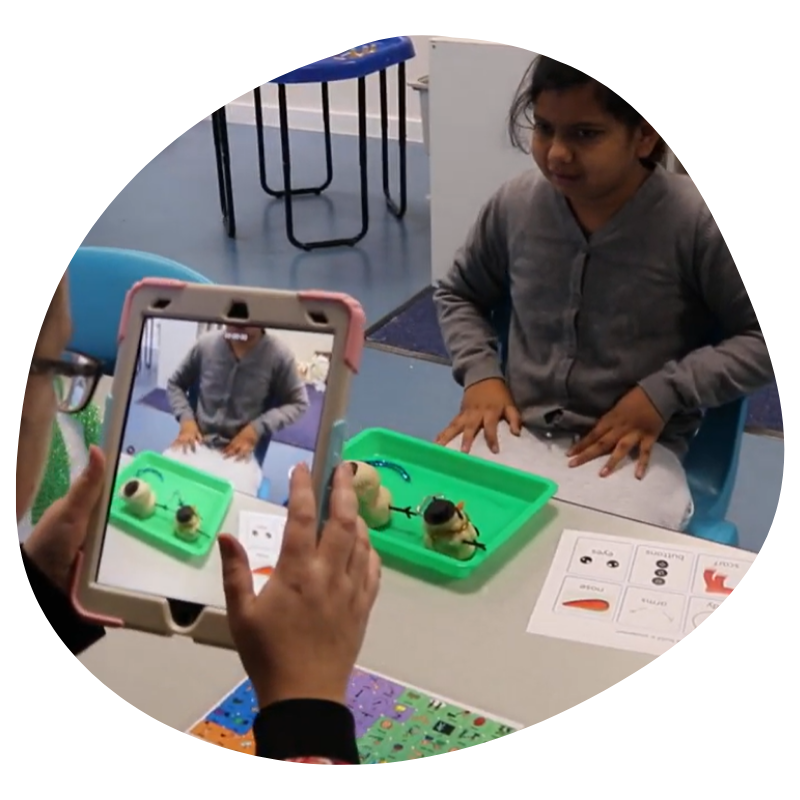
- Capture ‘moments of wonder.’ Short clips, small steps, tiny breakthroughs — these often tell the most powerful story.
- Create time for reflection. Build EfL into meetings, reviews and informal discussions; learning happens when teams reflect together.
- Make it manageable. Frameworks, tags and workflows should feel helpful, not overwhelming.
- Involve families early. EfL is most powerful when it opens a two-way conversation.
Next steps
Once the first phase is working confidently, leaders often move towards deeper integration;
1.
Embedding EfL in review cycles
Bringing EfL evidence into annual reviews, SEND reviews, progress meetings and leadership reports.
2.
Connecting EfL to wider vision and values
Linking evidence to trauma-informed practice, curriculum design, behaviour approaches and provision planning.
3.
Using EfL for CPD and
coaching
Reviewing clips in meetings, identifying emerging patterns and using them to shape training priorities.
4.
Scaling across the school
or trust
Extending from specialist provisions into mainstream classes, subject hubs or across the MAT.
The more EfL becomes part of everyday reflection and practice, the more it strengthens a school’s culture of understanding, inclusion and child-centred planning.
Join a free session to meet the EfL team and connect with other schools starting their EfL journey.