
EfL in Specialist Settings
The evidence, community and infrastructure the specialist sector already trusts – built with you, not for you.
Where the specialist sector is now
“Bring it right back to the child. SEND doesn’t need to be over-complicated; as long as you put your children at the heart, and empower your team to have professional discussions and empower an enquiry approach. Give time and space to your staff to talk to each other, have those conversations and learn from each other through that enquiry.”
– Cheryl Gaughan, Strategic Lead for SEND and inclusion, JMAT
Specialist provision has never been under more pressure – and has never been more central / integral to the success of the wider education system. Complexity is rising, funding is tightening, and the profile of need in every setting is shifting. Leaders and practitioners tell us the same things:
- The needs and profiles of our children are becoming more complex, and traditional systems weren't built to capture non-linear learning journeys.
- Evidence sits everywhere - therapy notes, EHCP reviews, classroom observations, photos, family conversations - but rarely comes together in one place.
- Teams are doing brilliant, deeply personalised work, but showing progress against EHCP outcomes to families, commissioners, governors and Ofsted takes disproportionate effort.
- "Practice-based evidence" - the thing that actually drives improvement in specialist settings - needs somewhere to live.
- A great importance in learning for life; supporting our learners with preparation for adulthood and maintaining aspirational outcomes. Building awareness of life beyond the school gates, tracking progress towards independence, and ensuring every learner's long-term goals are visible, valued, and actively worked towards.
“We really needed to understand our learners, but the challenge was that our learning felt isolating – we could never capture the moments together as a team. You want to bring everything together when building a curriculum, but we didn’t have the joined-up insight needed to fully profile our learners from the start.”
– Rachel Speed, Head of Quality of Education,
Dersingham & Calverton Primary School
What EfL does for a specialist setting
EfL is used in over 90% of specialist schools, colleges and alternative provisions across the UK – and a growing number internationally. It’s the shared place where teachers, support staff, SENDCos, curriculum leads, clinicians (SaLTs, OTs, physios, VI/HI advisers), local authority colleagues and families evidence, understand and drive learning for every learner.
In one place, EfL lets your team:
- Capture evidence – photo, video, note, parent contribution – against any framework you use: EHCP outcomes, the engagement model, pre-key stage standards, PfA, your own curriculum and skills framework.
- Tag the same piece of evidence to multiple frameworks at once, so nothing is recorded twice and progress across EHCP sections is visible in real time
- Assess the engagement model’s five areas of exploration – realisation, anticipation, persistence, and initiation – inside the app, linked directly to evidence.
- Share selected evidence with parents and multi-agency partners – families, therapists, medical professionals, and school leaders – and invite uploads from home, building a more accurate picture of each child and turning everyone into active partners in their learning.
- Produce reports for annual reviews, EHCP applications, governors and Ofsted at the touch of a button.
- Track progress beyond the curriculum – medical achievements, therapy goals, communication breakthroughs, and life skills – ensuring every milestone is captured, celebrated, and contributes to the full picture of each learner’s development.
Showcase the unique learning journeys of all of your SEND learners
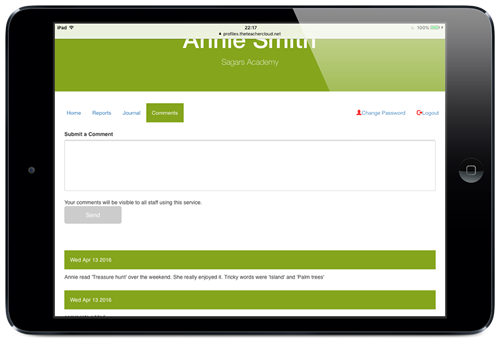
The Evidence for Learning app supports an inquiry-based approach to education and provision, that allows ALL stakeholders in a child, young person or adult’s learning and development to quickly and easily gather photo and video evidence, linked to the individual’s learning goals as well as any key skills frameworks. Observations can be annotated.
1. Build a clear picture and narrative of learning
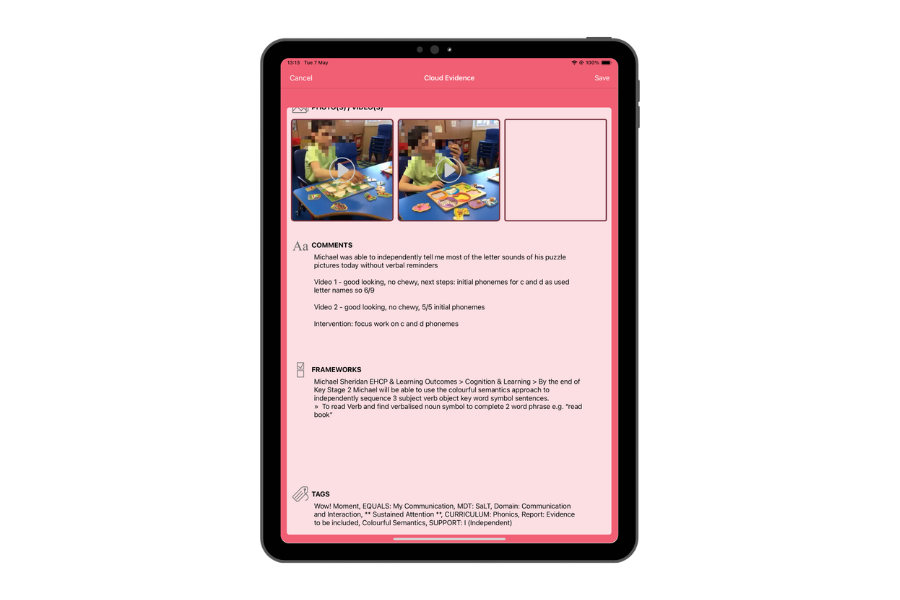
Easily and quickly combine rich photos/videos with a clear and comprehensive narrative… threading through it all of the appropriate elements in a pupil’s learning. Add links, tags and text notes to your observations, show how your curriculum, pedagogy and support inputs directly align with EHCPs, ISPs, and individualised learning/support plans. Demonstrate the breadth, depth and impact of your curriculum to any stakeholders as well as Ofsted inspectors.
2. Use that picture to be more effective in real-time
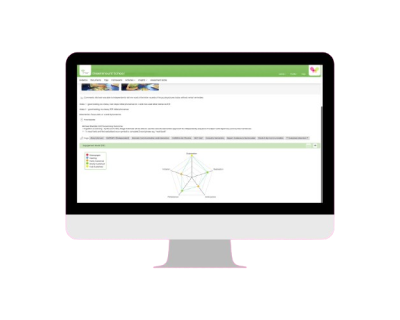
As the picture and narrative of learning develops, use it in real time to support professional conversations about learning, as well as key processes such as assessment, planning and looking at how you refine and adapt your practice and curriculum over time. It can also be easily used to create opportunities for authentic CPD across your school and improve how you engage, work with and support families.
3. Improve collaboration (whole team around the child)
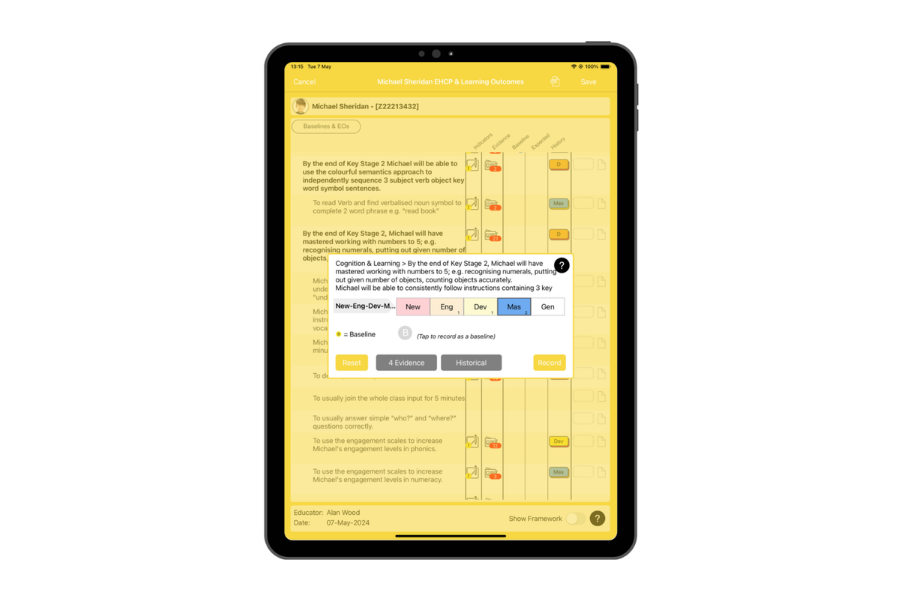
Share understanding and planning about each learner across the entire team including the multi disciplinary team and families - giving all stakeholders a voice (especially the learner). Enabling genuine authentic co-production and review, allowing everyone to make better-informed contributions to every learner’s journey and supporting a richer and deeper educational discourse.
4. Raise aspiration and build more inclusive practice
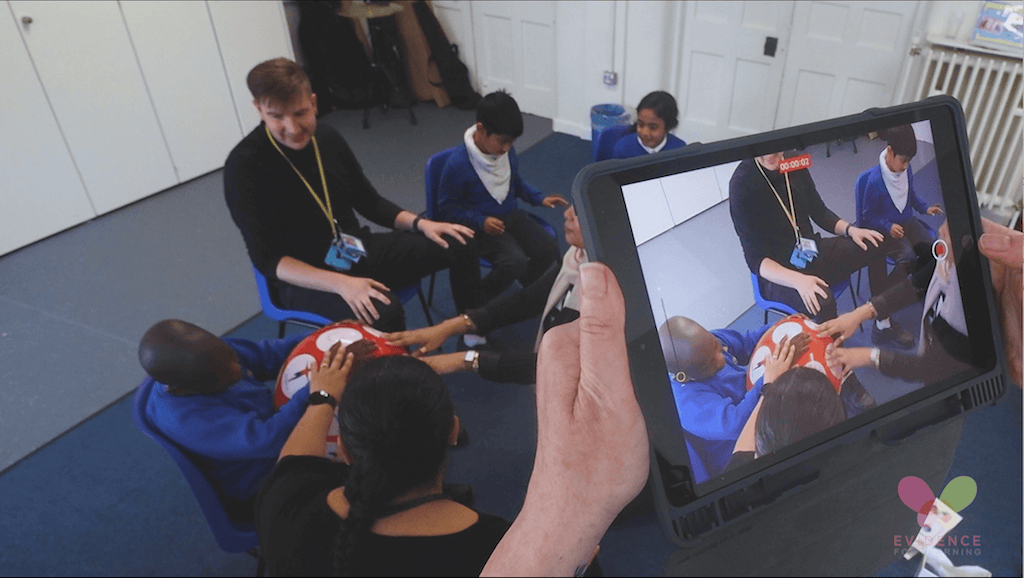
Use the picture of learning to raise expectations for all learners - celebrating every win and building a culture where progress is always visible and valued. As evidence accumulates, it becomes a powerful tool for workforce development: staff see what works, refine their practice in real time, and grow their understanding of how to support every child effectively. Turn your platform into a living CPD resource that raises aspiration across the team and ensures inclusive, effective practice is embedded across the setting.

EfL, supporting ambitious specialist provisions
For specialist leaders, EfL isn’t another system layered on top – it’s how ambitious, individualised, “child-led not system-led” provision actually gets planned, delivered and evidenced. It helps teams design curriculum around the child, with EHCP outcomes as the spine of everything. It helps staff evidence meaningful and enjoyable lives: outcomes like independence, communication, wellbeing, community, creativity, and preparation for life. It’s where practitioner insight gets turned into practice-based evidence through an inquiry-led approach, and helps teams support the DfE SEND and AP Directorate direction of travel.
“EfL is a central place where our whole school community can collate evidence together. With EfL we can piece the puzzle together and see characteristics and traits as observed by the whole team, which is all held in a central place. This leads to better profiles and drives earlier conversations and interventions for our children.”
– Lando du Plooy, Headteacher, Dersingham & Calverton
EfL LearningShared Community
When you invest in EfL, you join the EfL LearningShared community – a rapidly growing nationwide and international network of specialist leaders and practitioners.
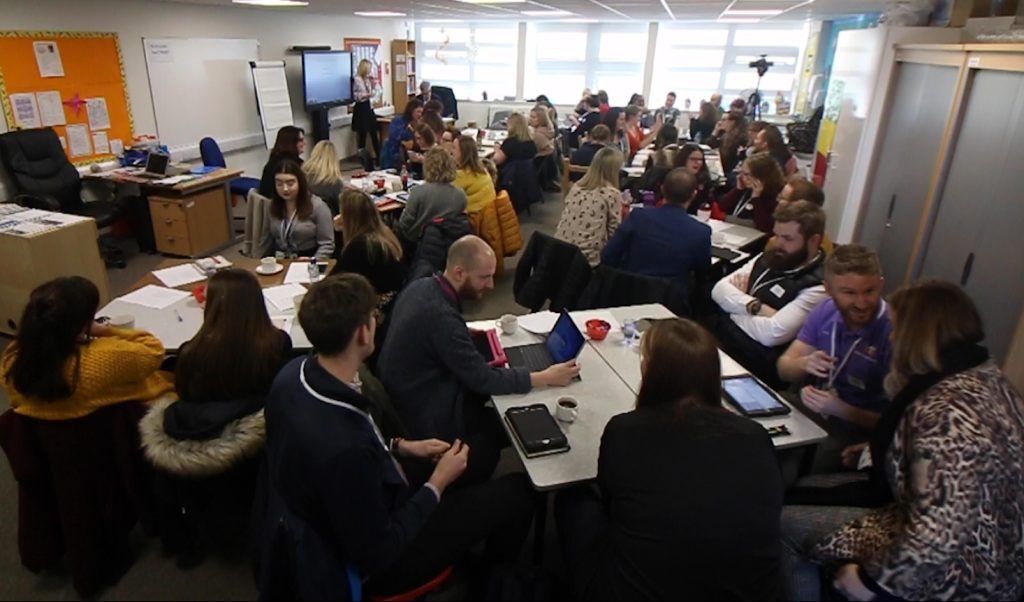
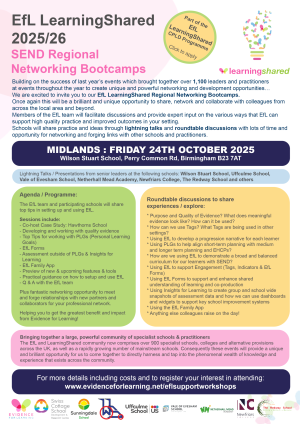
In 2025/26, our events brought together over 2,519 leaders and practitioners for conferences, regional networking and development days, Bootcamps and themed virtual events. Alongside our advisory board, our partnership with EQUALS, and our ongoing engagement with the DfE SEND & AP Directorate and Ofsted, this is where the sector is thinking together about SEND reform, the ‘Every Child Achieving and Thriving’ agenda, and what genuinely inclusive and aspirational provision looks like in practice.
Previous speakers have included…
(ASCL)
CBE OBE D.Litt PhD
(DfE)
(Chair of Rochford Review)

(JMAT & Whole School SEND)
In the words of Specialist Schools
Book a demo
The best way to see how EfL can support your school is to book an online demo with the team. Complete the form below and we’ll get straight back to you.
Pricing Models
EfL LearningShared subscribers (Lite & Full Plans): FREE with a valid LearningShared ticket
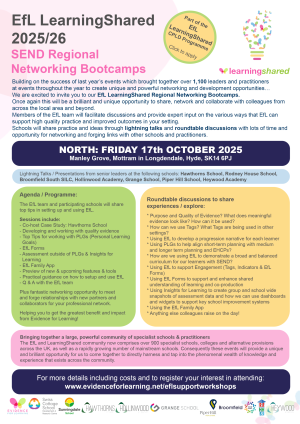
If your school or setting has a subscription to the EfL LearningShared CPLD Programme, either the Lite Plan or the Full Plan, then you will have 2 (two) FREE EfL LearningShared Bootcamp tickets which can be used at any of the EfL LearningShared Bootcamp events. Either 1 person can attend 2 different events for FREE (no cost) or 2 people can attend the same event for FREE (no cost).
Additional delegates can attend any event at a substantially discounted cost of £50 (ex VAT) per delegate / attendee. The school’s EfL LearningShared subscription must be active at the time of the event and the FREE tickets must not have already been used at a previous event.
Non-LearningShared subscribers: £100 (ex VAT) per delegate / attendee per event
If your school or setting does not have a subscription to the LearningShared CPLD Programme (Lite Plan or the Full Plan) then the cost to attend any of the events is £100 (ex VAT) per delegate / attendee.
Alternatively the school / setting can subscribe and enrol to the LearningShared CPLD Programme using the form below to take advantage of the free and reduced attendee costs as well as to gain access to all the features and benefits of the LearningShared CPLD Programme.
Learn more about the Learning Shared CPLD Programme here.
** PLEASE COMPLETE THE ONLINE BOOKING FORM BELOW TO REGISTER ATTENDEES FROM YOUR SCHOOL OR SETTING **
RESERVE YOUR SEATS
Showcase the unique learning journeys of all of your SEND learners
The Evidence for Learning app supports an inquiry-based approach to education and provision, that allows ALL stakeholders in a child, young person or adult’s learning and development to quickly and easily gather photo and video evidence, linked to the individual’s learning goals as well as any key skills frameworks. Observations can be annotated.
1. Build a clear picture and narrative of learning
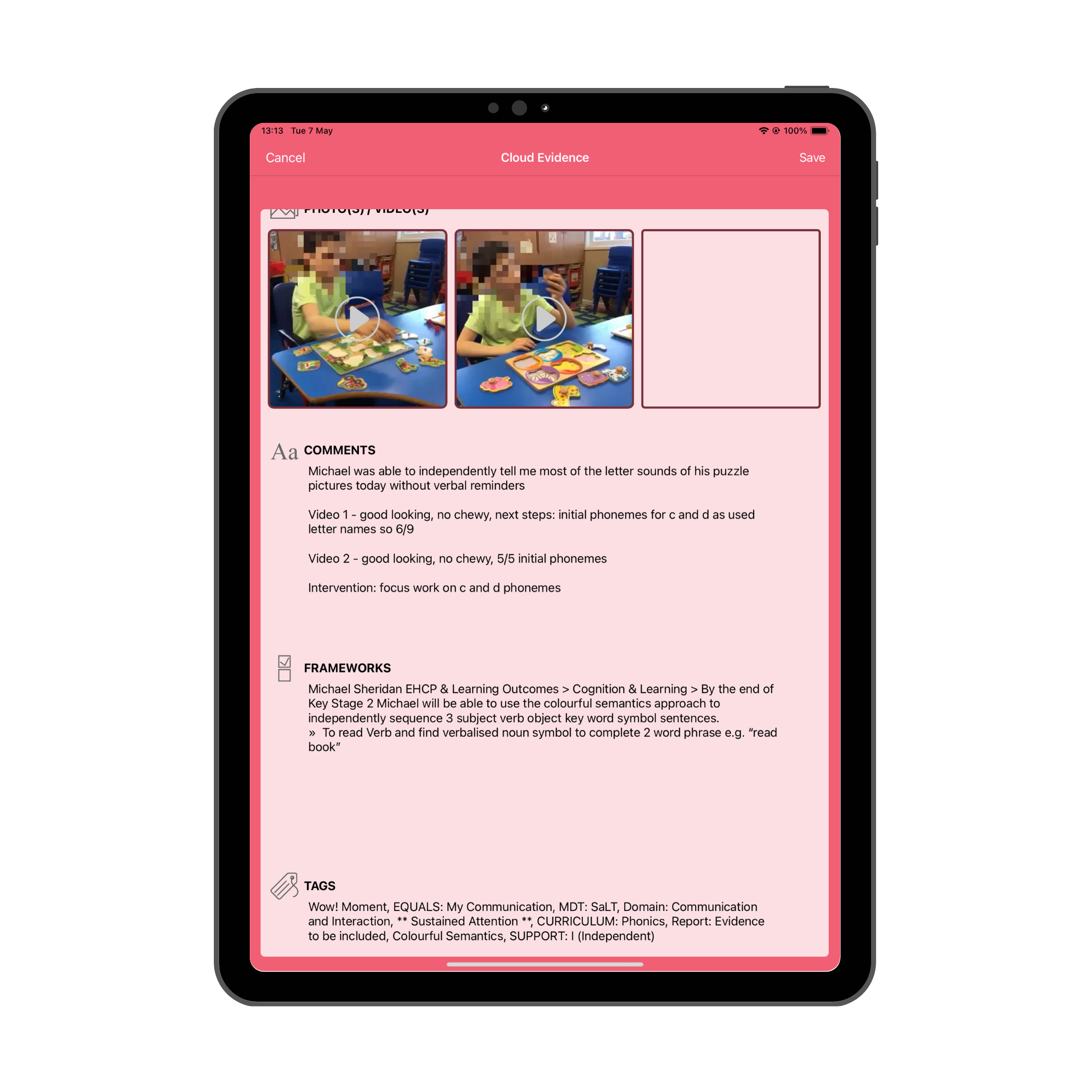
Easily and quickly combine rich photos/videos with a clear and comprehensive narrative… threading through it all of the appropriate elements in a pupil’s learning. Add links, tags and text notes to your observations, show how your curriculum, pedagogy and support inputs directly align with EHCPs, IEPs, and support plans. Demonstrate the breadth, depth and impact of your curriculum to any stakeholders as well as Ofsted inspectors.
2. Use that picture to be more effective in real-time

As the picture and narrative of learning develops, use it in real time to support professional conversations about learning, as well as key processes such as assessment, planning and looking at how you refine and adapt your practice and curriculum over time. It can also be easily used to create opportunities for authentic CPD across your school and improve how you engage, work with and support families.
3. Improve collaboration (whole team around the CYP)
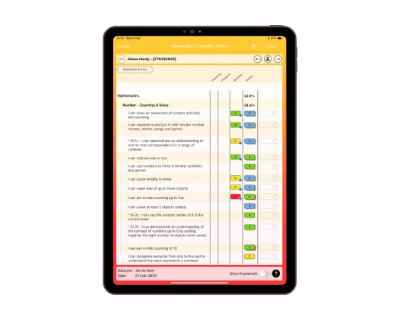
Share understanding and planning about each learner across the entire team including the multi disciplinary team and families — giving all stakeholders a voice (especially the learner). Enabling genuine authentic co-production and review, allowing everyone to make better-informed contributions to every learner’s journey and supporting a richer and deeper educational discourse.
4. Raise aspiration and build more inclusive practice

Use the picture of learning to raise expectations for all learners - celebrating every win and building a culture where progress is always visible and valued. As evidence accumulates, it becomes a powerful tool for workforce development: staff see what works, refine their practice in real time, and grow their understanding of how to support every child effectively. Turn your platform into a living CPD resource that raises aspiration across the team and ensures inclusive, effective practice is embedded across the setting.